
Quebec City: Fall Head Over Heels in 36 Hours
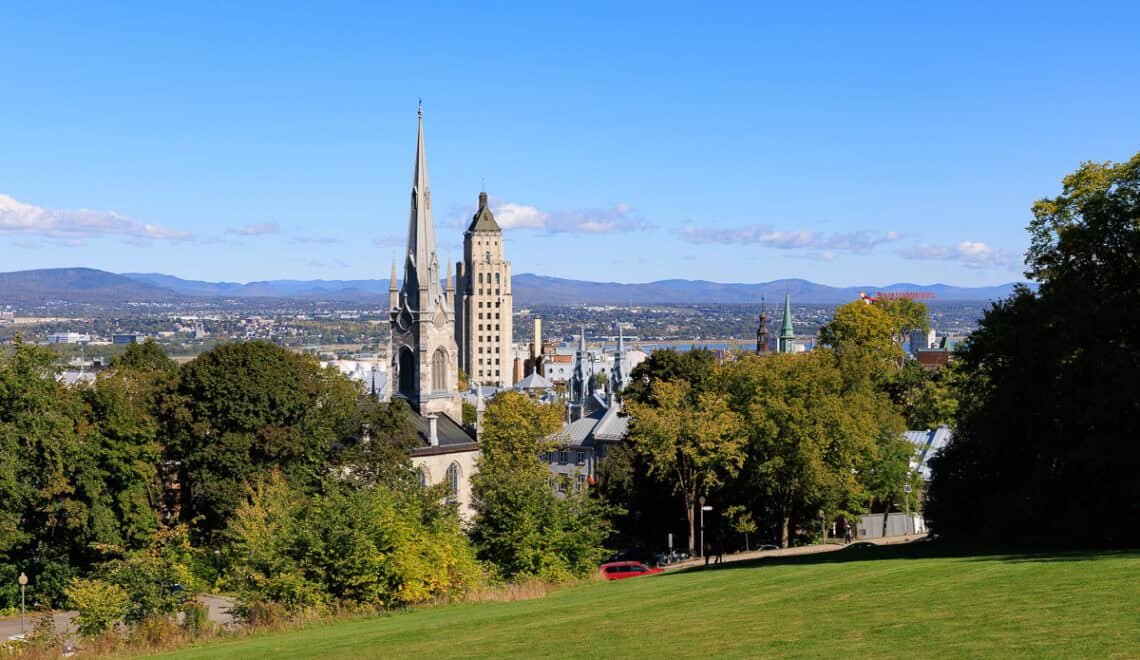
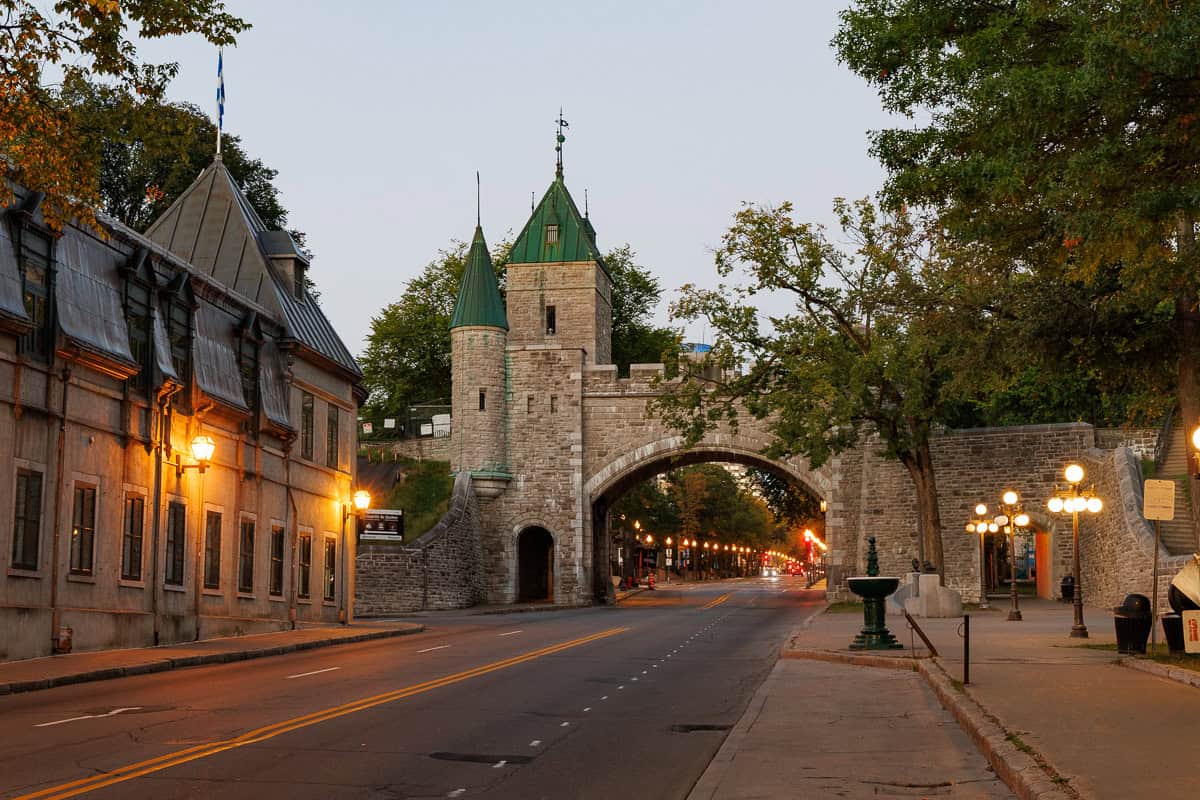
Ah, Quebec City. It didn’t take us long to fall in love. An hour, perhaps. Perched on cliffs overlooking the St. Lawrence River in Eastern Canada, Quebec City is the capital of the French-speaking province of Quebec. It is known for its achingly beautiful Old Town, a UNESCO World Heritage site, chock-full of quaint public squares and European-style charm. It is the only remaining fortified city north of Mexico, and visitors can walk atop the ramparts. Quebec City is also known for its fantastic food culture, shaped largely by French and Indigenous cuisine.
Many of the major highlights of the city are close together, so you can see a lot in just 36 hours. It is the perfect amount of time if you’re coming in by train from Montreal for a quick visit, or if you’re on one of the numerous mid-sized and small cruise ships that dock overnight in the harbor seasonally. After getting a taste of Quebec City (literally and figuratively), you’ll no doubt start plotting your return.
Table of Contents
** Please note that this page contains affiliate links, meaning we may earn a very small commission if you book through them (at no extra cost to you).
When to Visit Quebec City
If possible, autumn is an ideal time to visit, with mild temperatures and vibrantly colored foliage. Spring and summer are also wonderful, with endless outdoor activities and waterfalls in their full glory.
Winter can be a joy — for those who don’t mind the cold. The temperature reach well below zero (far lower with the wind chill), and an average of 125 inches of snow falls. The trade-off is fewer crowds, architecture that is, if possible, even lovlier when covered with snow, a large German-style Christmas Market from late November until Christmas, and Carnival de Quebec, the largest winter festival in the Northern Hemisphere, held in late January or early February each year. Snow sports opportunities abound, including multiple ski resorts within an hour’s drive.
Where to Stay
To make the most of your visit, stay in Vieux-Québec, the Old Town. Upper and Lower Old Town are adjacent to each other, but separated by the steep cliffs of Cap Diamant.
You can easily move between the two. If you’re looking for some exercise, take a series of staircases, including the Escalier casse–cou (Breakneck Stairs), Quebec’s oldest stairs, all the way from the Port of Quebec to Upper Town. Or you can walk up the steeply sloped street Côte de la Montagne to avoid stairs. Or, easiest of all, hop on the fun funicular and be swept up the hill in just a minute.
You’ll be spending lots of time in both Upper and Lower Town, so stay in either one; there is no wrong choice.
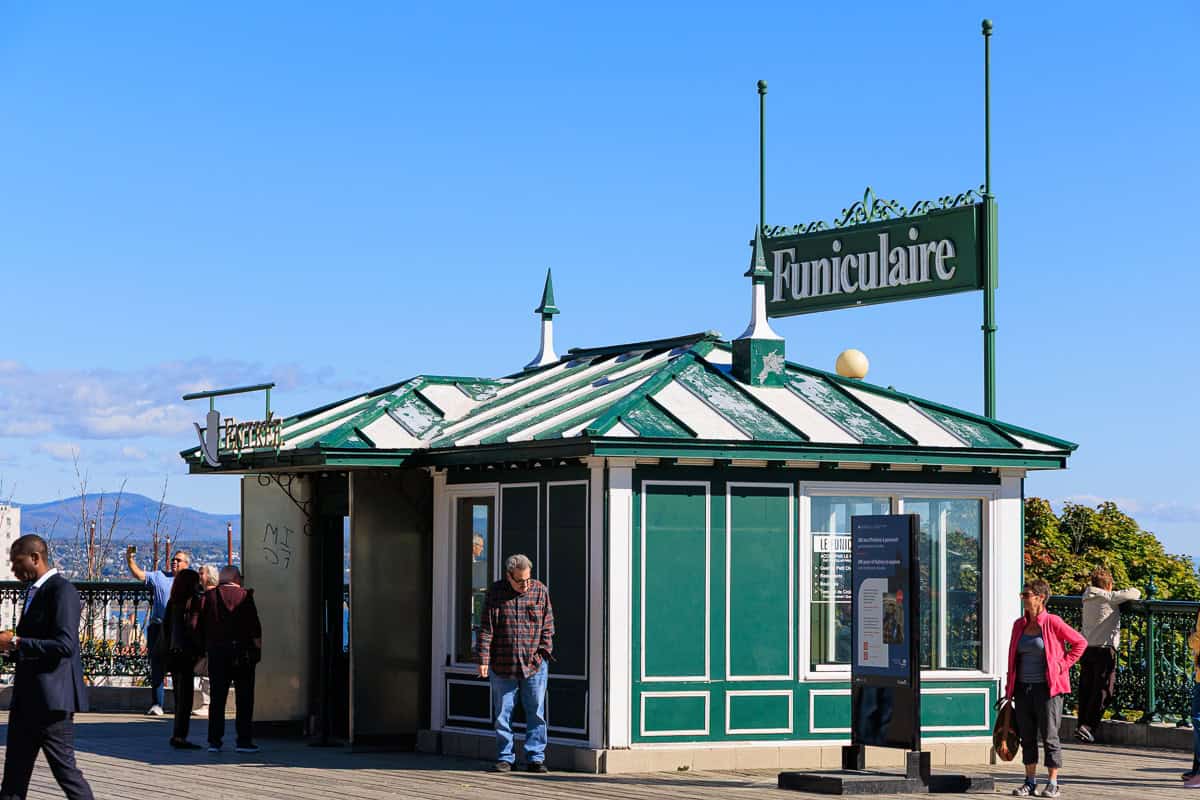
Upper Town, sitting atop the cliffs, is partially located inside Quebec City’s ancient rampart walls. Enjoy the gorgeous views! You can choose to stay near (or even in!) the iconic Château Frontenac. There are numerous large and mid-sized hotels, as well as some smaller, more intimate lodgings.
Lower Town is extremely picturesque, with narrow, winding cobblestone streets and easy access to the waterfront. Lodging options tend to be mid-sized and smaller boutique hotels.
Day 1 – Morning – Upper Old Town: Plains of Abraham, The Citadel, Château Frontenac
Start your day early at Café La Maison Smith, a branch of a local chain located in the heart of the expansive Plains of Abraham. Fuel up with a house-roasted coffee specialty drink and perhaps a freshly baked pastry or breakfast sandwich.
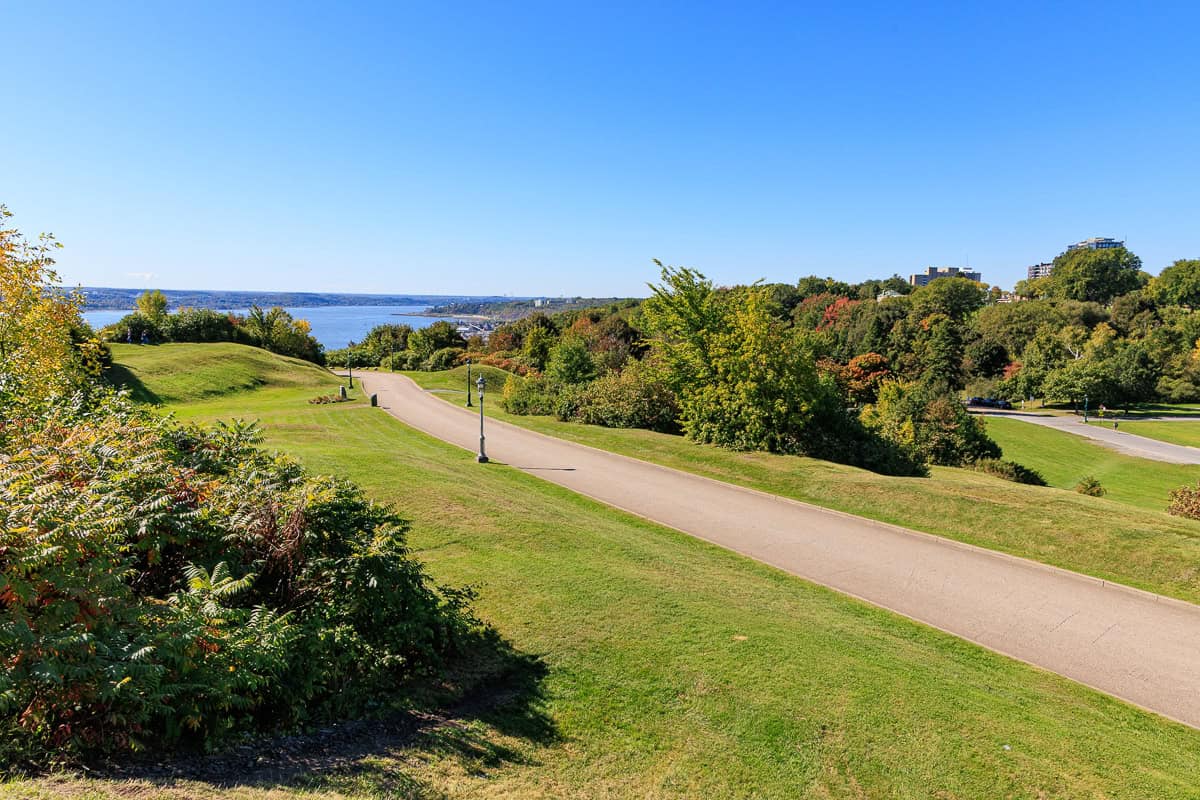
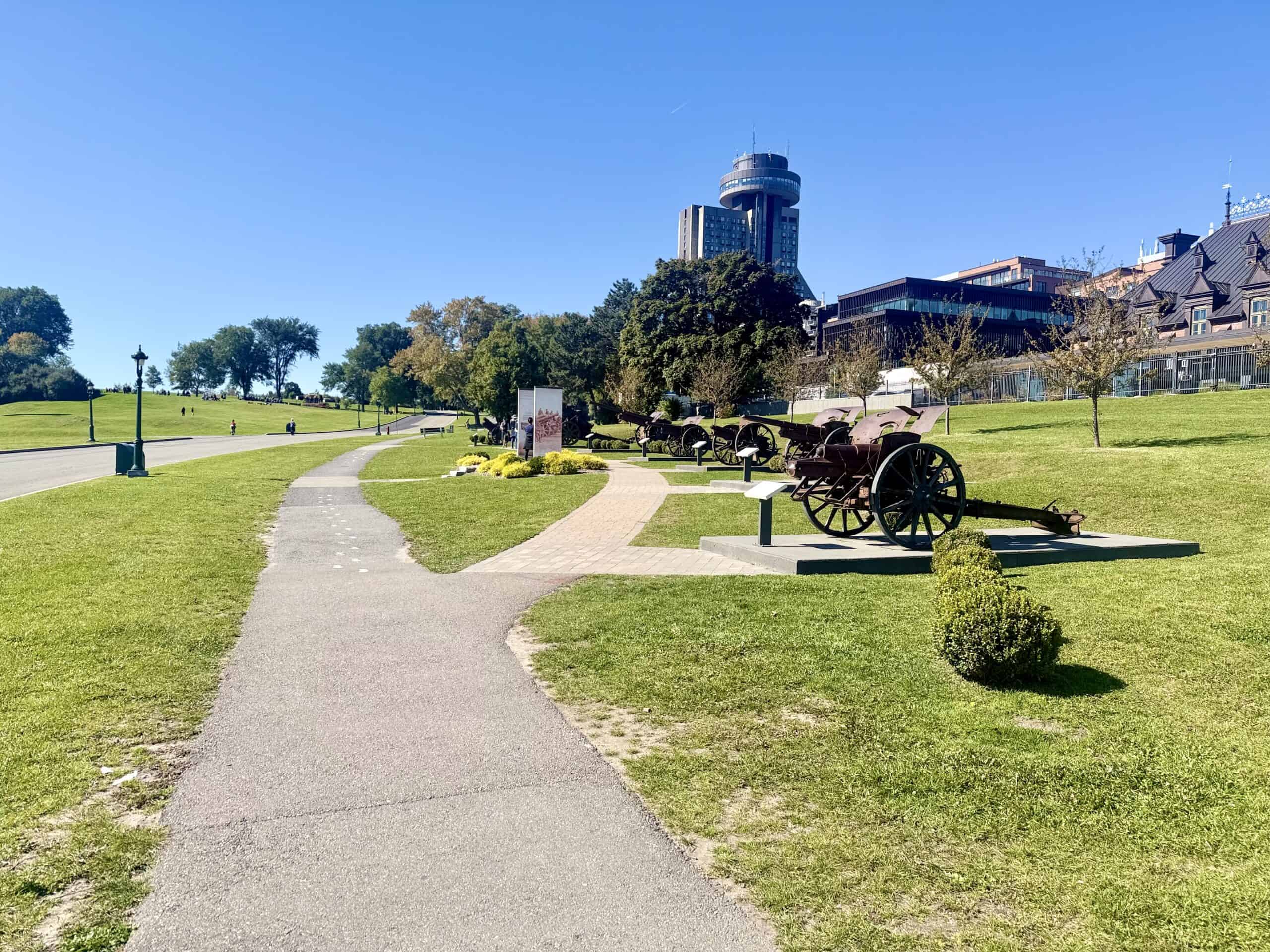
The Plains of Abraham is the site of the 1759 Battle of the Plains of Abraham, where the British decisively defeated French troops during the Seven Years’ War. The battle led to the surrender of Quebec (and eventually all of Canada) to the British. It is now a peaceful, scenic park, with wide-open green spaces, gardens, monuments, and walking paths.
If you’re a military history buff, explore the interactive Plains of Abraham Museum. Otherwise, stroll through the lovely area, making your way to Viewpoint Saint Laurent River, near the northeastern edge of the park, and soak in the stunning 360-degree views of Quebec City, the river, and the rest of the park.
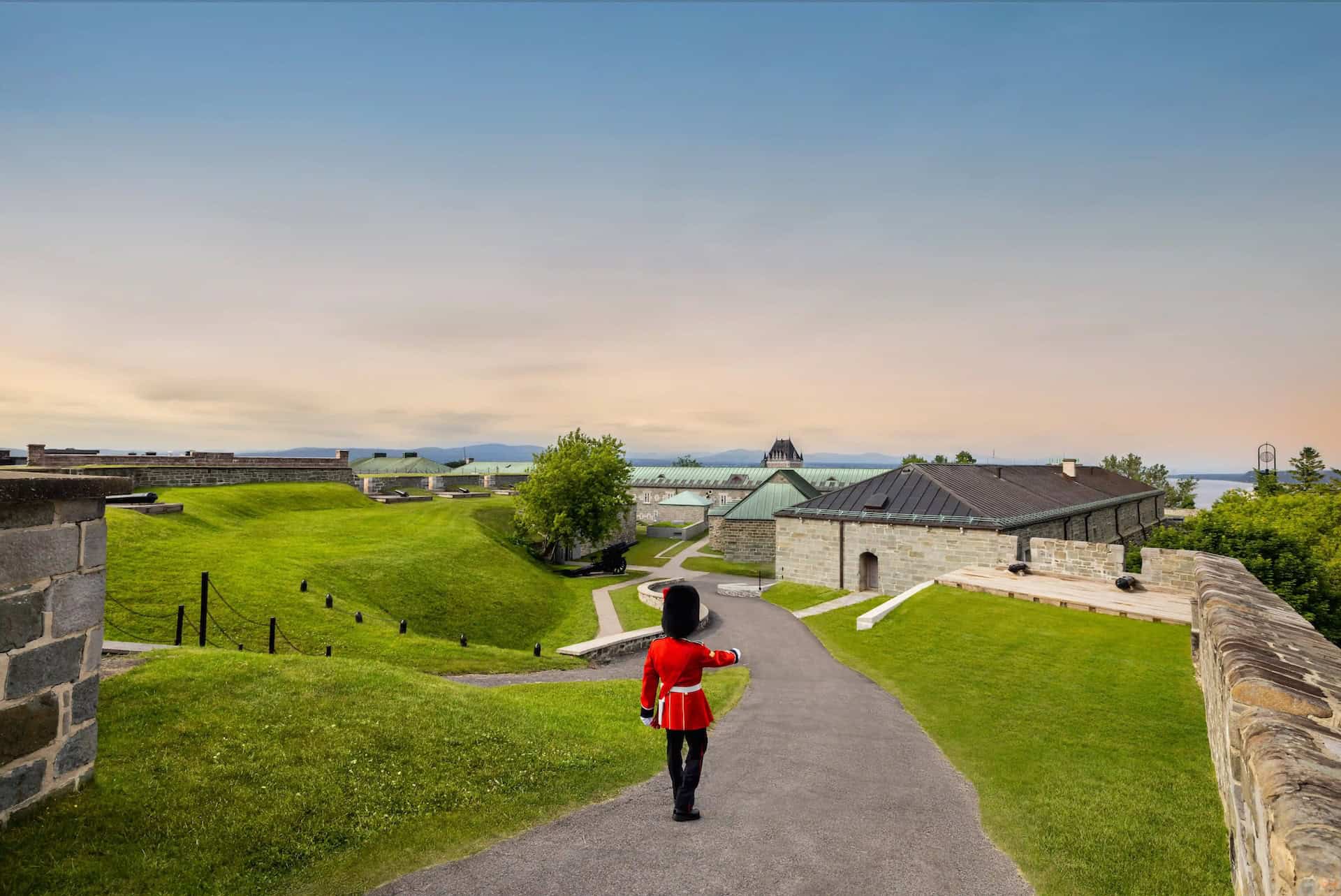
From there, take a ten-minute walk to the impressive Citadelle of Quebec, an active military base, strategically located at the highest point of Cap Diamant. The historic star-shaped fort features interesting architecture, thick stone walls, ramparts, and ditches built mostly between 1820 and 1831. Due to the active military presence, there are no self-guided tours of the facilities. Instead, visitors take an interesting one-hour guided tour, included with the price of admission. When walking on the ramparts, the views of Old Town, especially Château Frontenac, are breathtaking.
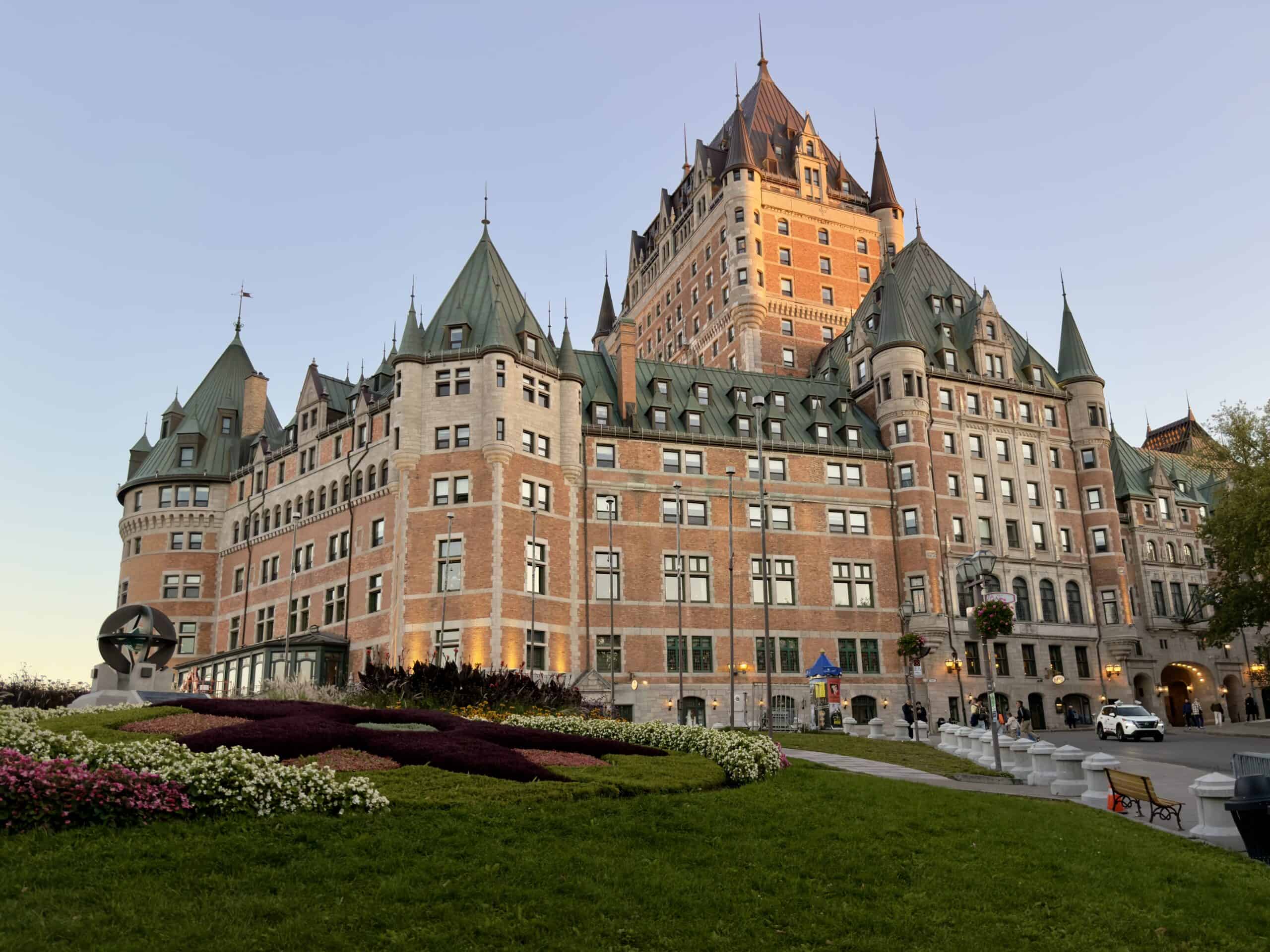
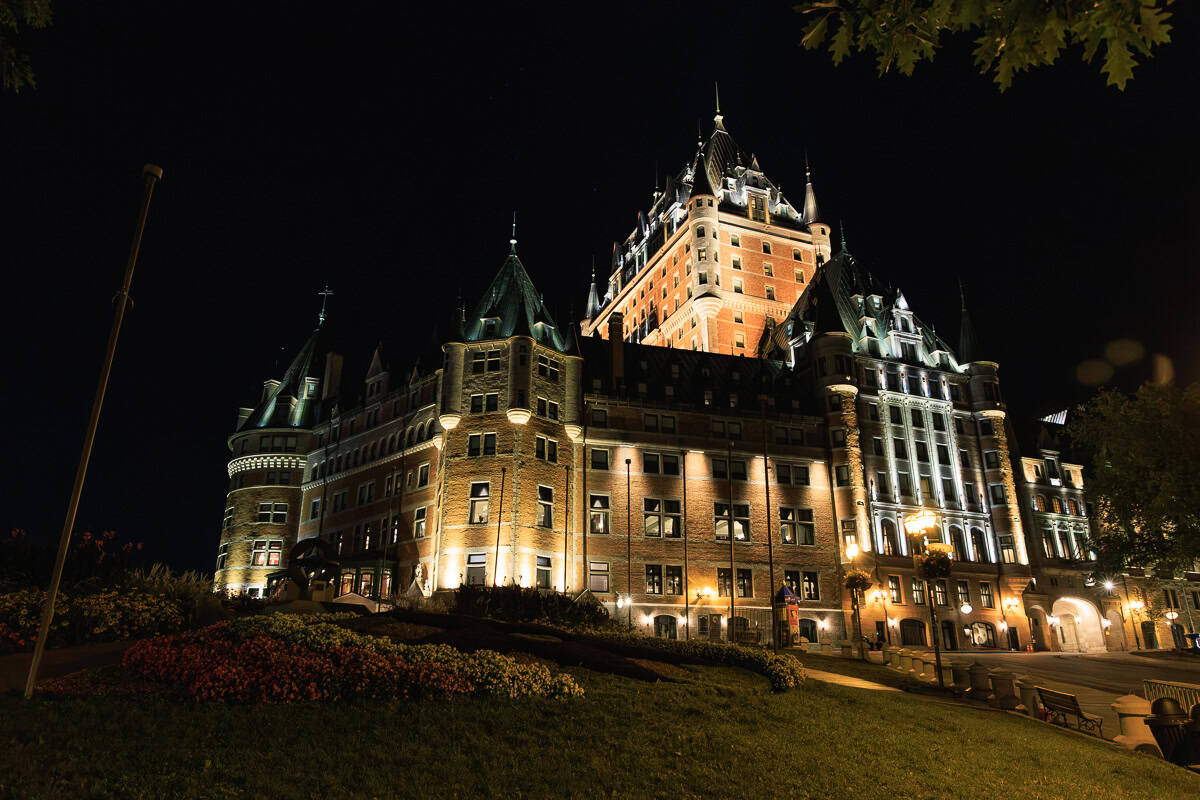
Next, take a 15-minute walk (or a quick cab ride) to see Château Frontenac up close and personal. This spectacular, imposing, castle-like building is the most photographed hotel in the world and is the quintessential symbol of Quebec City. It towers over the city and is visible from nearly anywhere in Old Town and the waterfront area.
Built in 1893 to attract wealthy train travelers, the 5-star hotel is now operated by Fairmont. Its rich history includes hosting World War II conferences where Winston Churchill, Franklin D. Roosevelt, and others planned D-Day and other military actions. Its guests have included King George VI, Queen Elizabeth II, Princess Grace of Monaco, Charles de Gaulle, and Ronald Regan.
Guests of the hotel have access to guided tours of the property, but rooms are incredibly expensive, particularly during the summer and holidays. Non-guests can enter and walk through the common areas, enjoy a meal or a drink at one of the restaurants, and browse around the high-end boutiques. But honestly, the best part of the hotel is the extraordinary exterior.
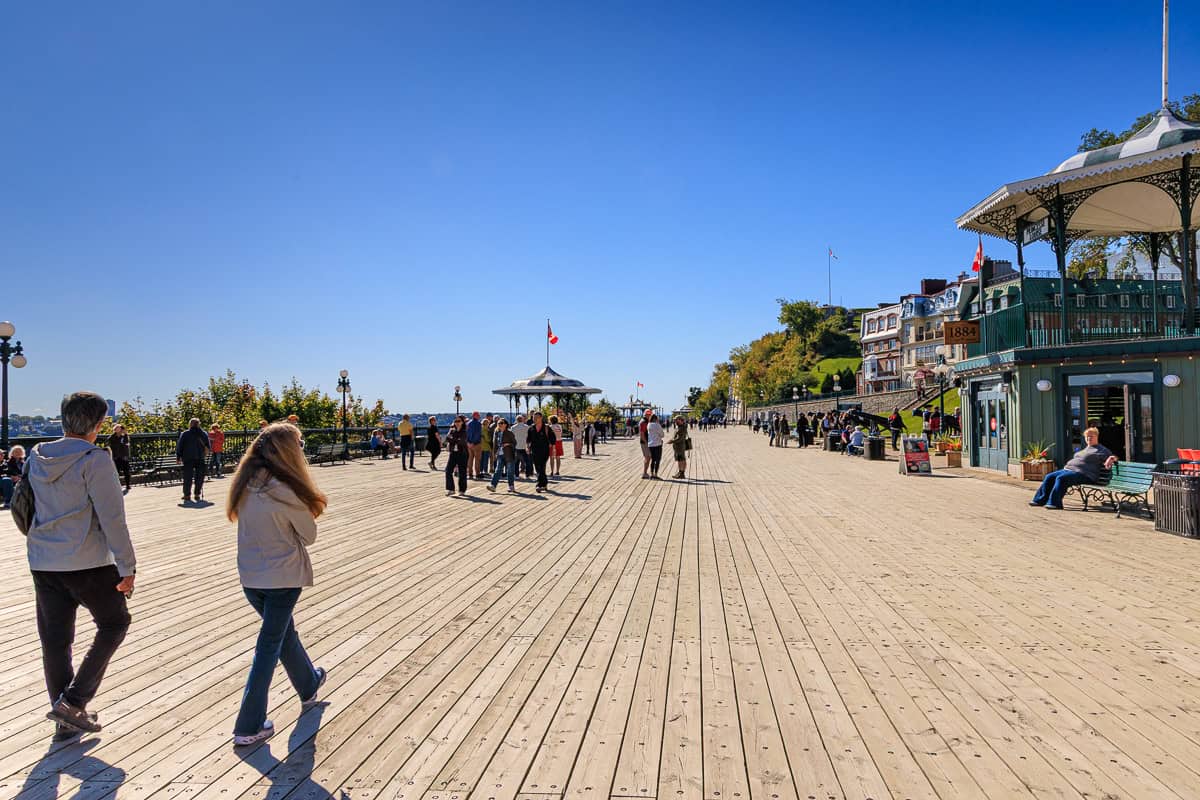
Head outside to the charming (but often crowded) Dufferin Terrace, a wooden promenade wrapping around the hotel and overlooking the St. Lawrence River. There are nearly endless photo opportunities of the Château and the surrounding area. It is particularly stunning in the early mornings and evenings, when it is ablaze with lights.
Day 1 – Lunch
A wide variety of tempting eateries surround the area, in addition to the several inside the Chatêau. Follow your nose, and choose one. For a real treat, reserve a table in advance at Michelin-starred Le Clan, just a block or two away. Lunch is a wonderful opportunity to experience a Michelin restaurant, while paying a fraction of the cost of a dinner.
Day 1 – Afternoon – Parliament Hill & Shopping on rue Saint-Jean
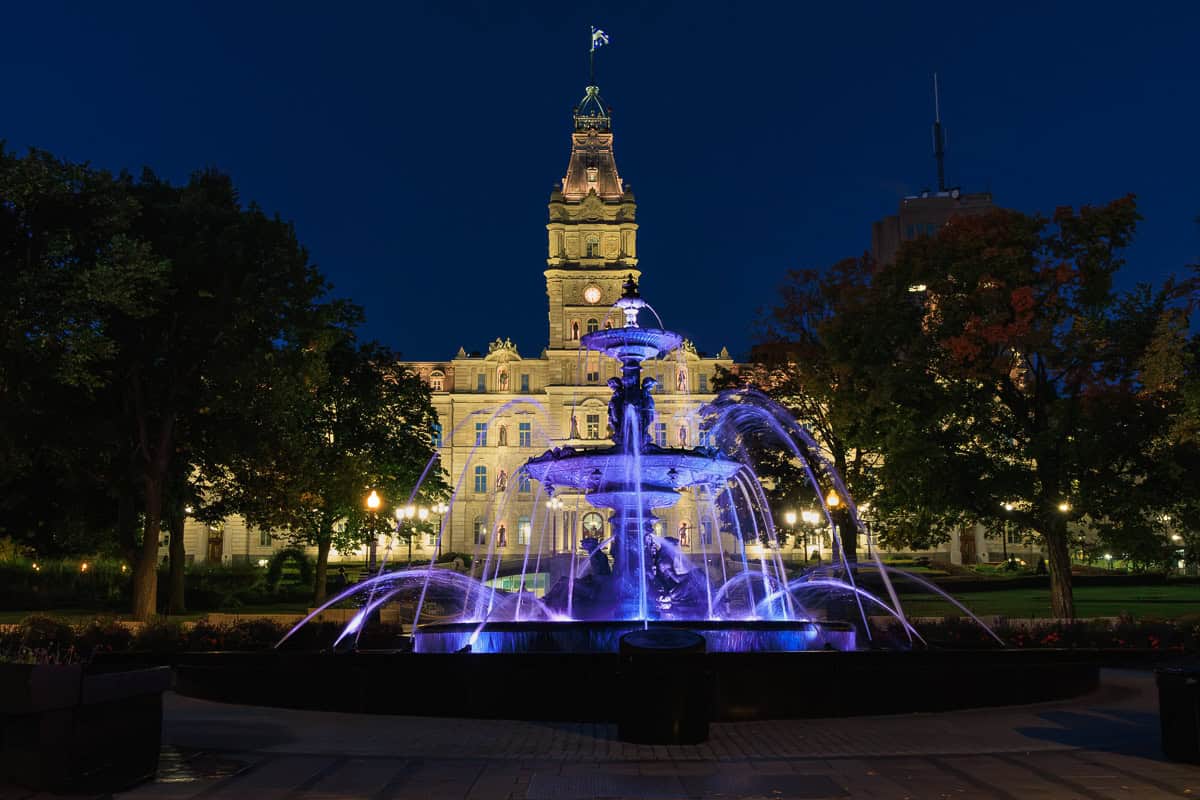
After lunch, walk a few blocks to the ornate Fontaine de Tourny, sitting adjacent to Parliament Hill. The mesmerizing fountain features dozens of mythological and water-themed bronze figures, artfully arranged around its tiered basins, including a circle of 16 frogs in different poses, spraying water inward.
Behind the fountain sits the stunning Parliament Building. Built between 1877 and 1866, the exterior features 26 statues of historical figures, both French and British, including Samuel de Champlain, the founder of Quebec City, and numerous military leaders and politicians. There is also a display of nearly 100 different coats of arms.
Visitors may enter the building and take a guided tour at no cost (booked in advance online). A self-guided tour map is also available. Highlights include an incredible display of stained-glass windows forming an arch to walk under to enter the legislative chambers, the architecture and art in the library, and an unexpected underground tunnel featuring an artistic sound-and-light exhibit representing the diverse “shades” of political opinions expressed in the legislative chambers above.
From the Parliament Building, a pleasant ten-minute walk will bring you to Rue Saint-Jean, Quebec City’s oldest shopping street, running both inside and outside the Old Town walls. Finish your afternoon by strolling along the small boutiques, specialty food shops, bookshops, and souvenir shops.
Day 1 – Evening
For dinner, there are a plethora of choices in both Upper and Lower Old Town, and you can pick anything from pub fare to fine dining and everything in between in either place. It is hard to go wrong.
For a special, historic experience, reserve a table at Quebec City’s oldest gourmet restaurant, Le Continental, a block from Château Frontenac. This 70-year-old classic French fine-dining restaurant features a formal, old-world interior with dark wood and white tablecloths, and waiters in classic white jackets.
Le Continental is known for its impressive tableside service. Caesar salads are prepared right in front of you, including making the dressing from scratch. Filet mignon is dramatically flambéed with demi-glace wine sauce at your table. Likewise, Dover sole Meunière is pan-fried, deboned, and sauced tableside. It doesn’t stop there, even some of the desserts, such as Crêpes Suzette, are prepared and flambéed at your table.
It is an unforgettable experience and was even featured in Anthony Bourdain’s Parts Unknown (season 1, episode 4).
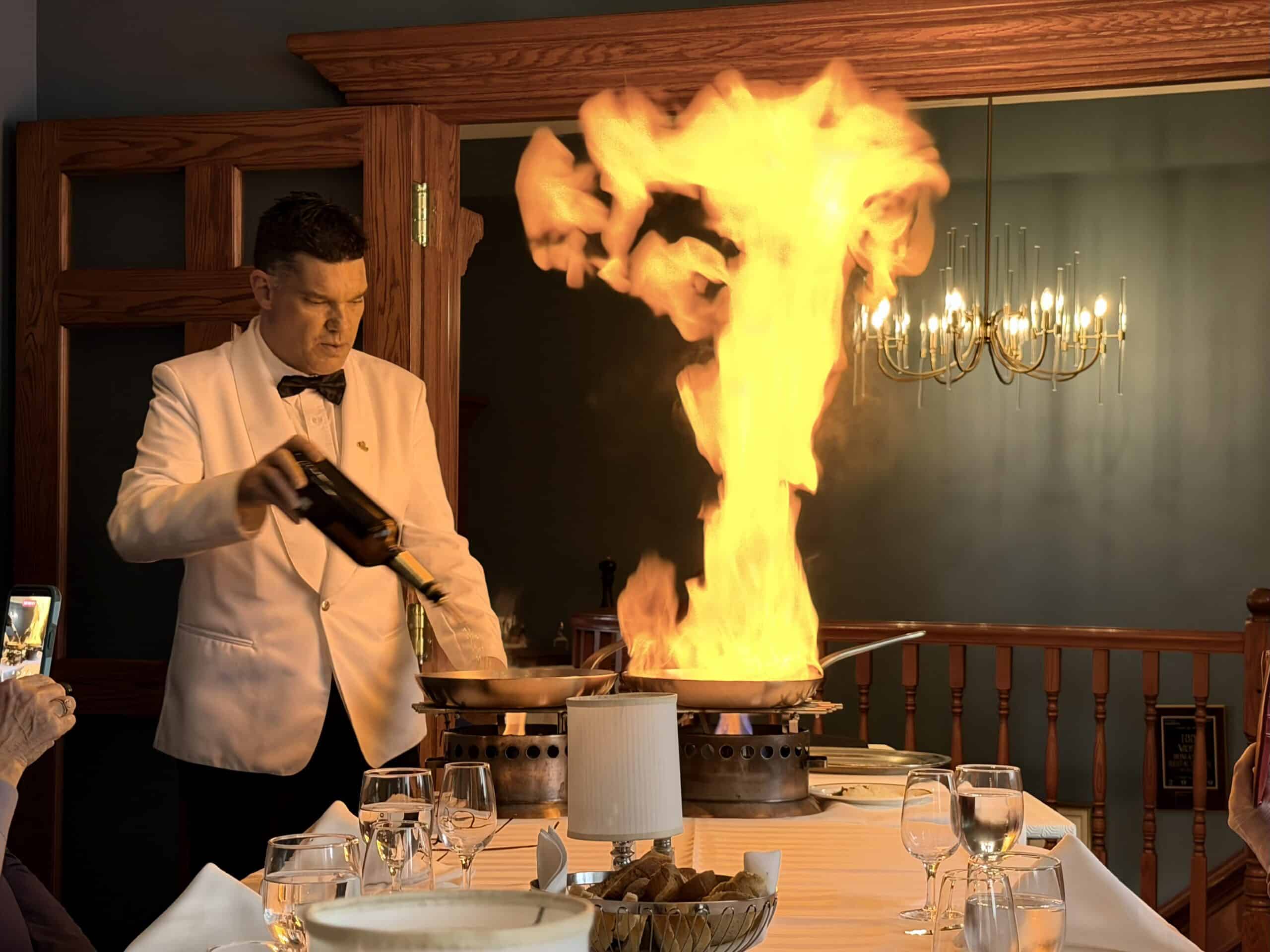
While in Upper Old Town, another excellent choice is to try Indigenous cuisine at Sagamité, specializing in wild game and fish. Worry not; you will not miss out on the flambé demonstrations of Le Continental. Sagamité’s specialty dish, Yatista, is prepared tableside with large pieces of elk, bison, and venison suspended from a conical metal tripod, doused in a whisky reduction, and set aflame.
After dinner, be sure to take some time to wander through Old Town (upper, lower, or both) to see the streets, architecture, and, of course, the Château, all beautifully illuminated.
Day 2 – Morning – Montmorency Falls Park
As enchanting as Old Town is, it’s time to head to the outskirts of the city to see one of the province of Quebec’s many natural wonders, Montmorency Falls Park. Though it is a mere 8 miles from Old Town, it feels a world away.
Driving or taking a taxi or Lyft is the quickest and most flexible way to get there, taking about 15 minutes each direction. Another option is to take one of the shuttle buses, which run seasonally between the Old Town area and the park. There are also several well-rated half-day group tours available, some even including other nearby attractions. If you take the shuttle or a group tour, the cost of the admission ticket is generally included.
In most seasons, the park opens at 9:00 am, and that is the best time to arrive to enjoy your visit with fewer crowds. (The first shuttle bus arrives at about 11:00 am.) Tickets can be purchased in advance. ($10 CAD at the time of writing)
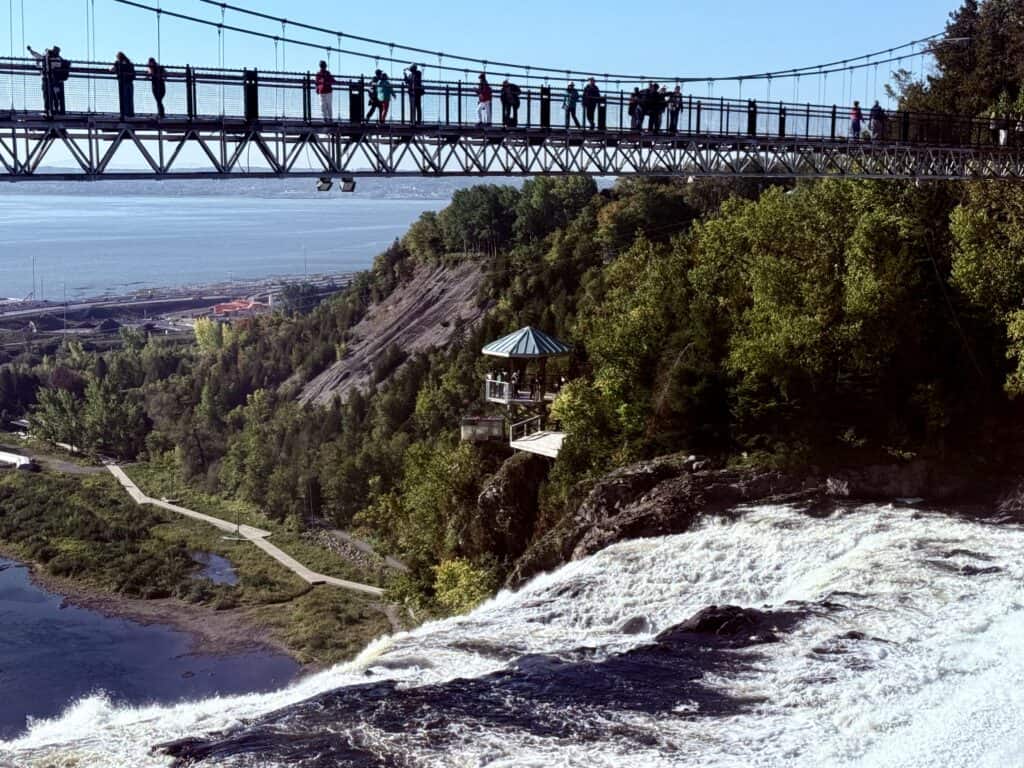
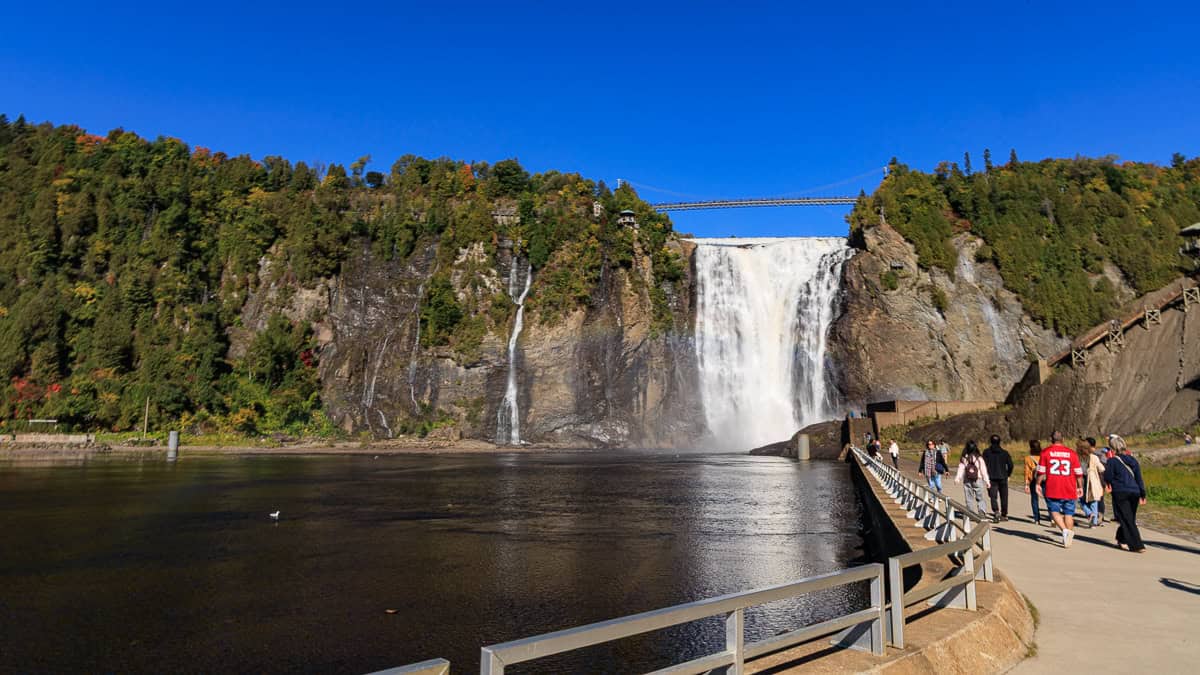
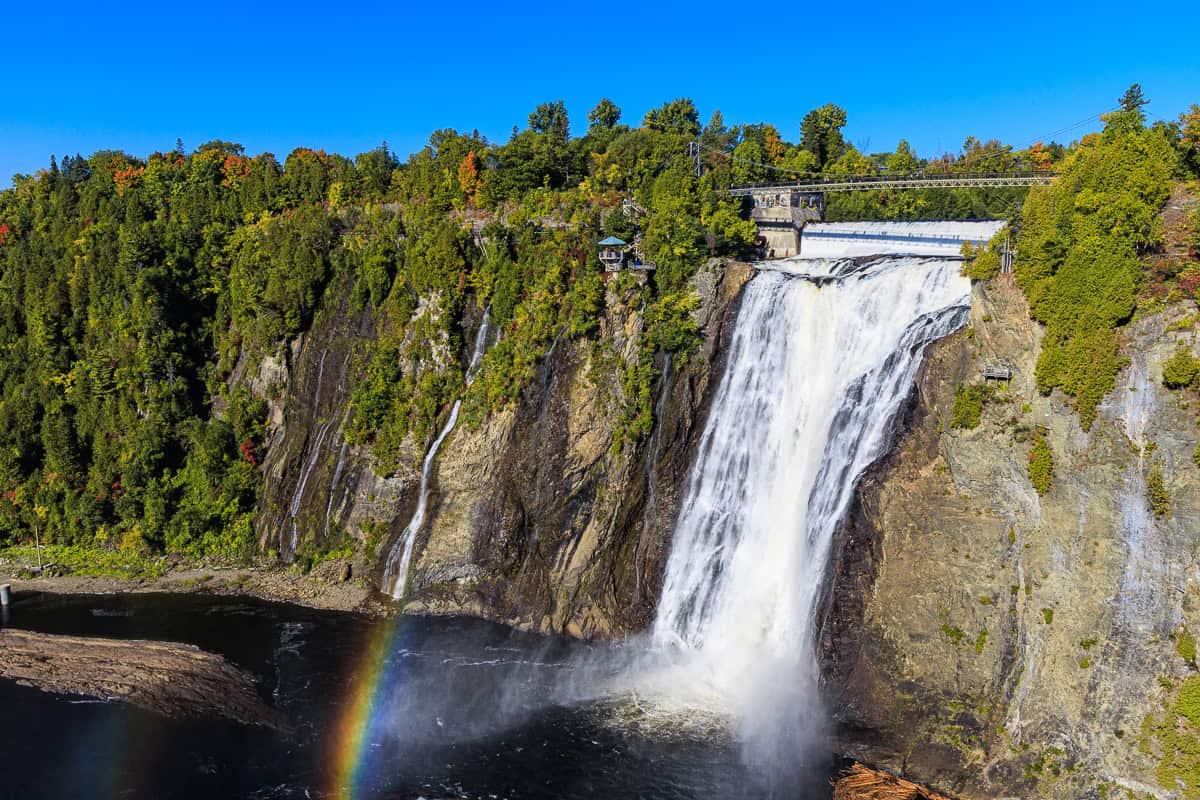
The park’s namesake and main attraction is the spectacular 275-foot-tall, 150-foot-wide Montmorency Falls. It is nearly 100 feet taller than Niagara Falls.
Parking is available at both the top and bottom of the falls. Viewing from both areas is essential. Starting from the top of the falls, a boardwalk leads to an observation deck, and then to a 150-foot suspension bridge above the falls, spanning their entire width. Walking across it is an exhilarating experience, and one can feel the falls roaring beneath on the vibrating bridge.
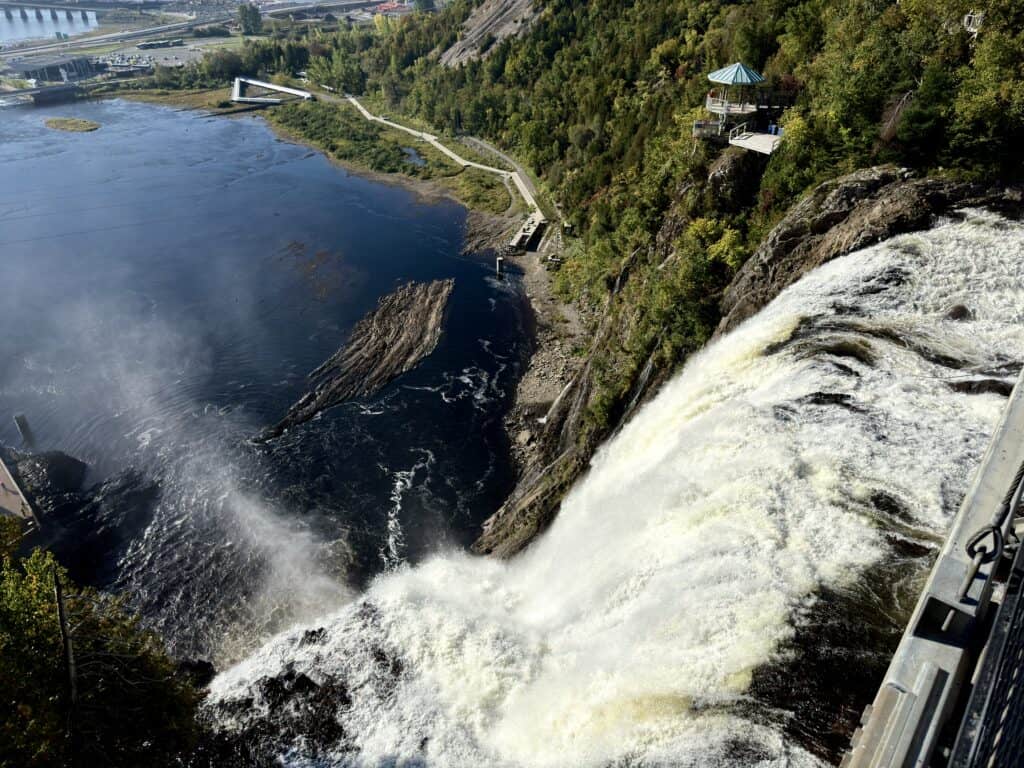
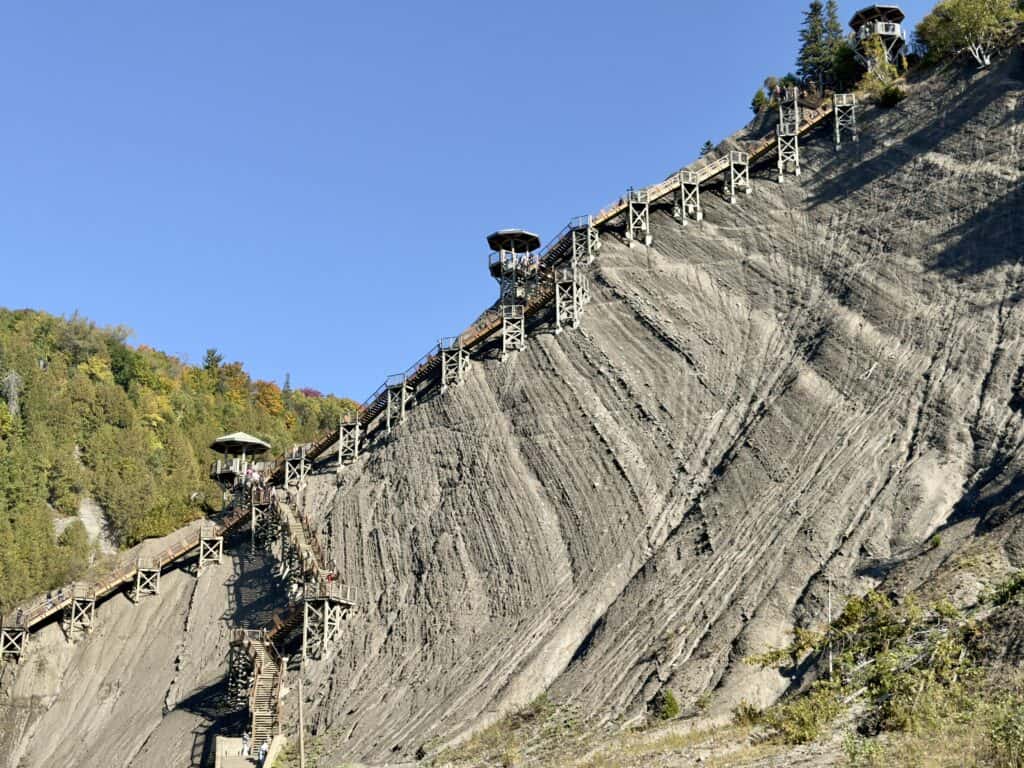
On the other side of the bridge, a path leads to a series of steep wooden staircases climbing down the cliff beside the falls – a total of 487 stairs. There are multiple stopping points with large wooden gazebos providing jaw-dropping overlooks. A rainbow often becomes visible as you get closer to the bottom. At the bottom, there are more paths and viewing points. If you follow the rock walkway up close to the falls, you will definitely get wet from the mist!
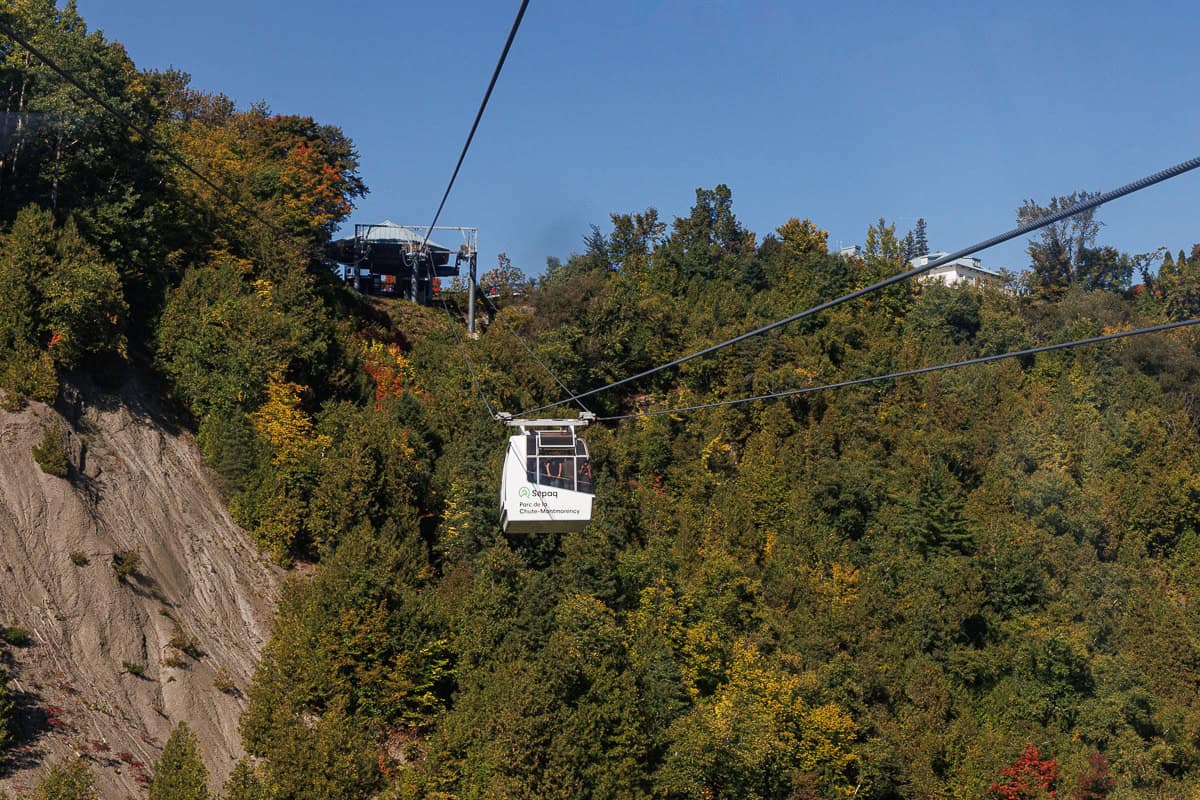
To return to the top, visitors can climb back up the stairs or take a scenic cable car ride ($14 at the time of this writing). The quick, smooth cable car ride provides yet another vantage point to see the falls. The cable car is available in both directions, so one could easily start at the bottom of the falls, climb up the stairs, and ride the cable car down. (Visitors can also take the cable car in both directions if desired.)
Back at the top, Manoir Montmorency, an English-style manor originally built for British Governor Sir Frederick Haldimand and later occupied by the Duke of Kent, offers an interpretation center, a gift shop, and a restaurant.
For really adventurous folks, there is a 1000-foot zipline that runs across the front of the falls, and guided cliffside climbing routes (beginner and intermediate) using steel cables and iron rungs.
Day 2 – Lunch
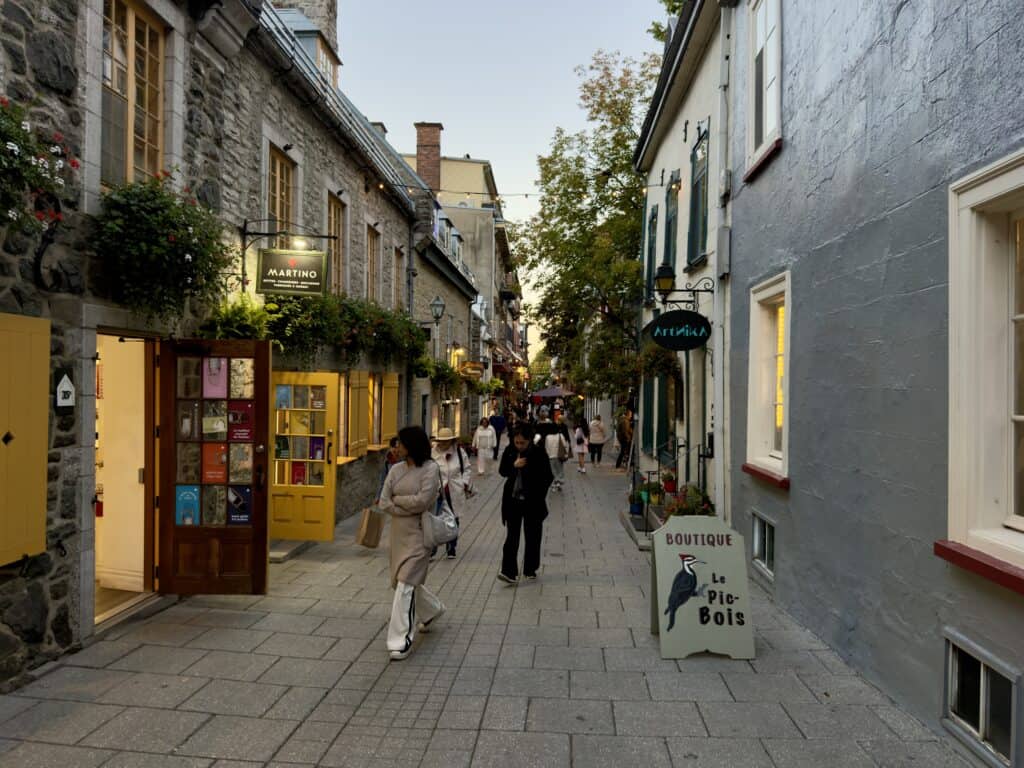
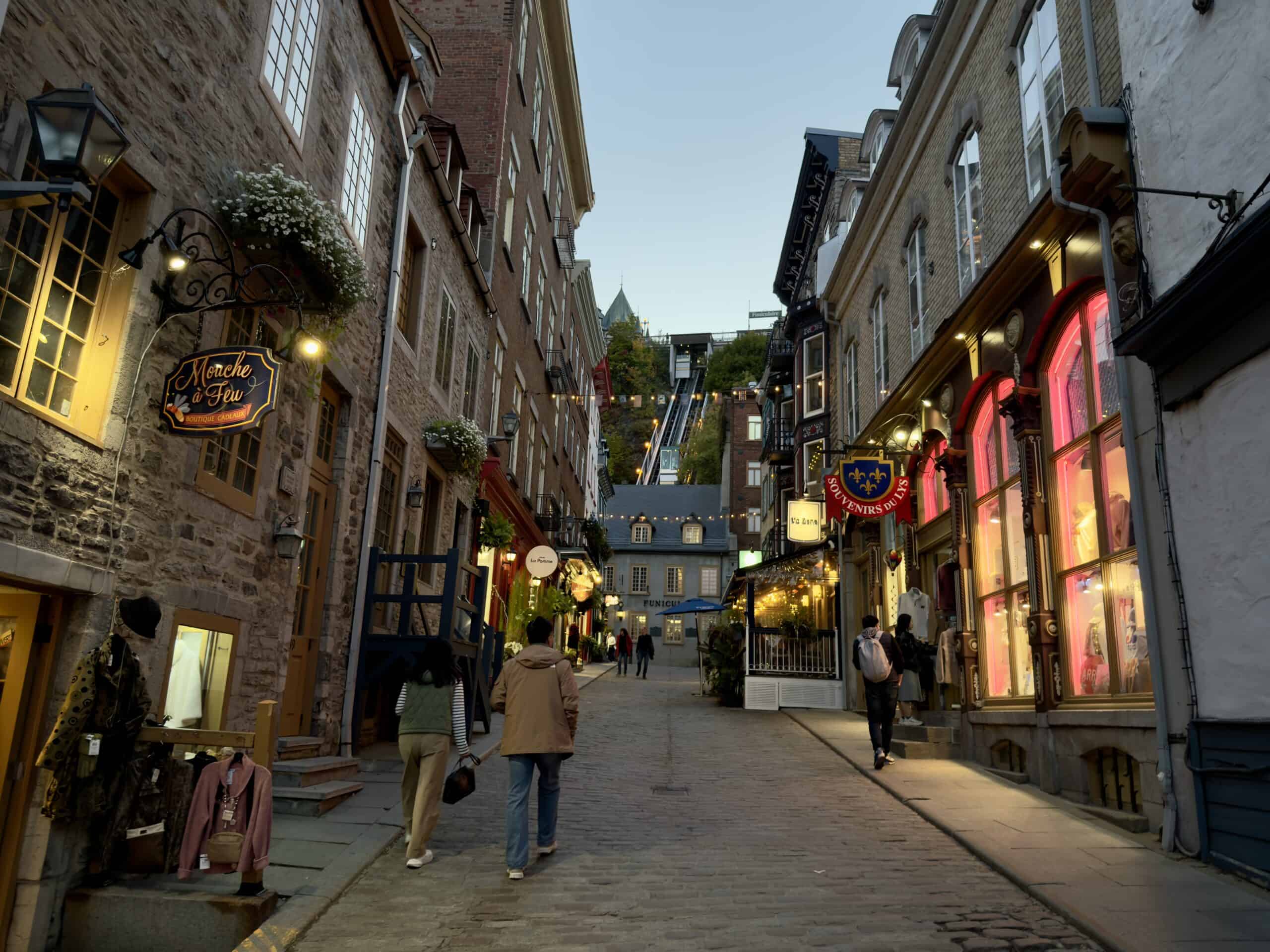
Return to Old Town and head to the impossibly charming street, Rue du Petit-Champlain, located at the foot of the cliff, far below Château Frontenac. Packed with postcard-worthy bistros, pubs, cafés, and outdoor terraces, you will have no problem finding a place for lunch.
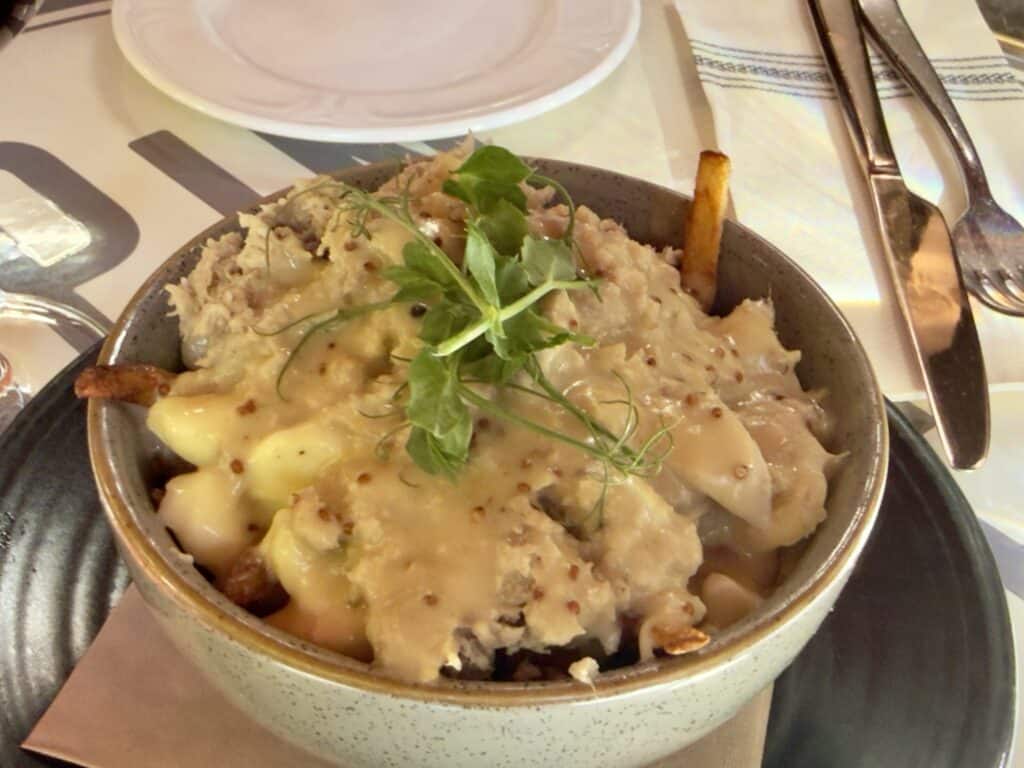
One excellent choice is Le Lapin Sauté, a cozy, delightful restaurant serving casual French fare. They are known for their rabbit and duck. (Sharing an appetizer portion of rabbit poutine is a great way to start your meal!)
Day 2 – Afternoon – Lower Old Town
Spend the rest of your day meandering through the adorable Lower Old Town, perhaps popping into some of the plentiful small, independent boutiques, art galleries, specialty food shops, and artisan shops.
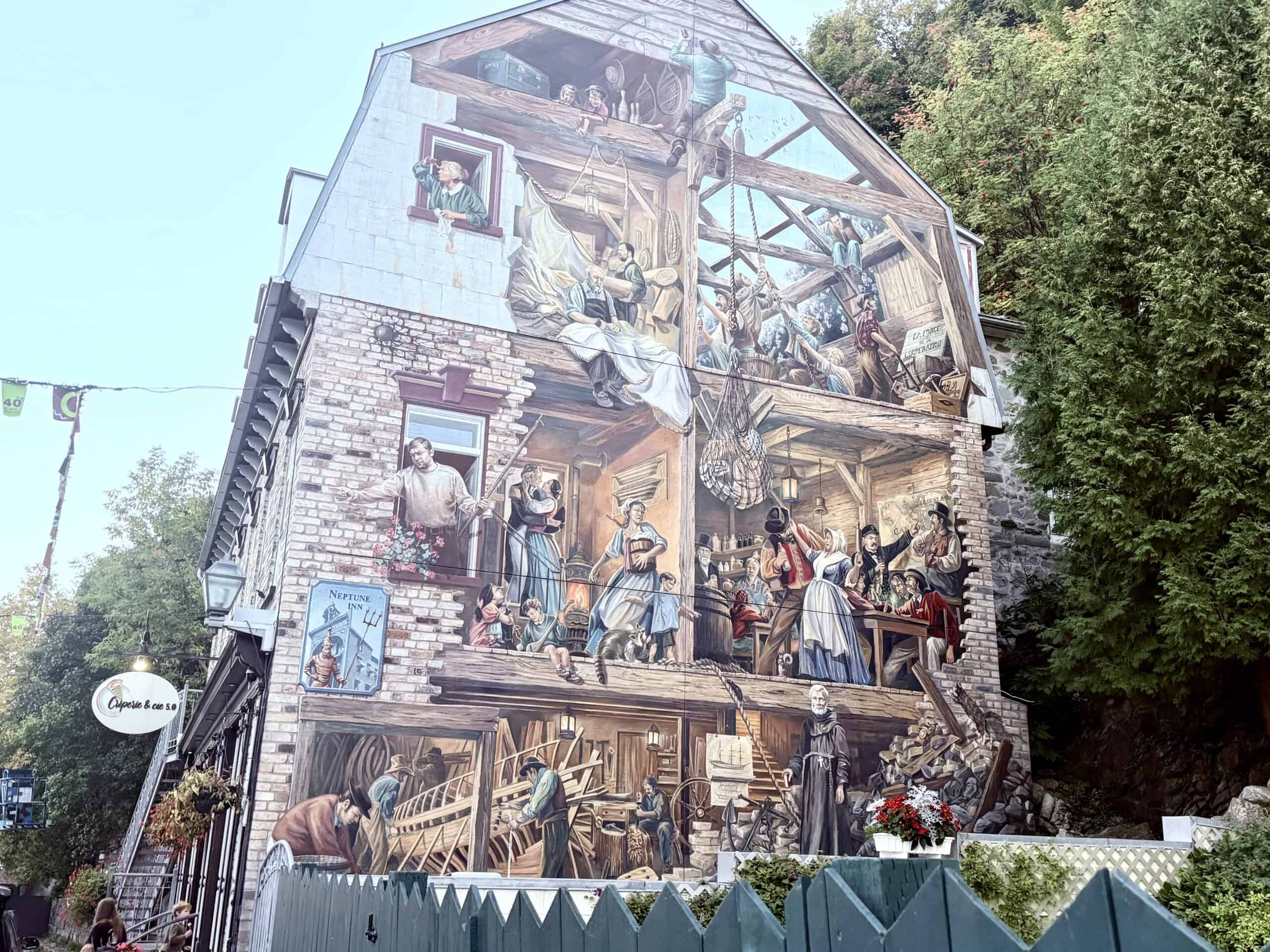
Check out the huge mural, Fresque du Petit-Champlain, just a few steps from Le Lapin Sauté, depicting the area’s rich history and everyday life in the then working-class neighborhood. Viewed from the street, it seems as if it is a 3-D painting.
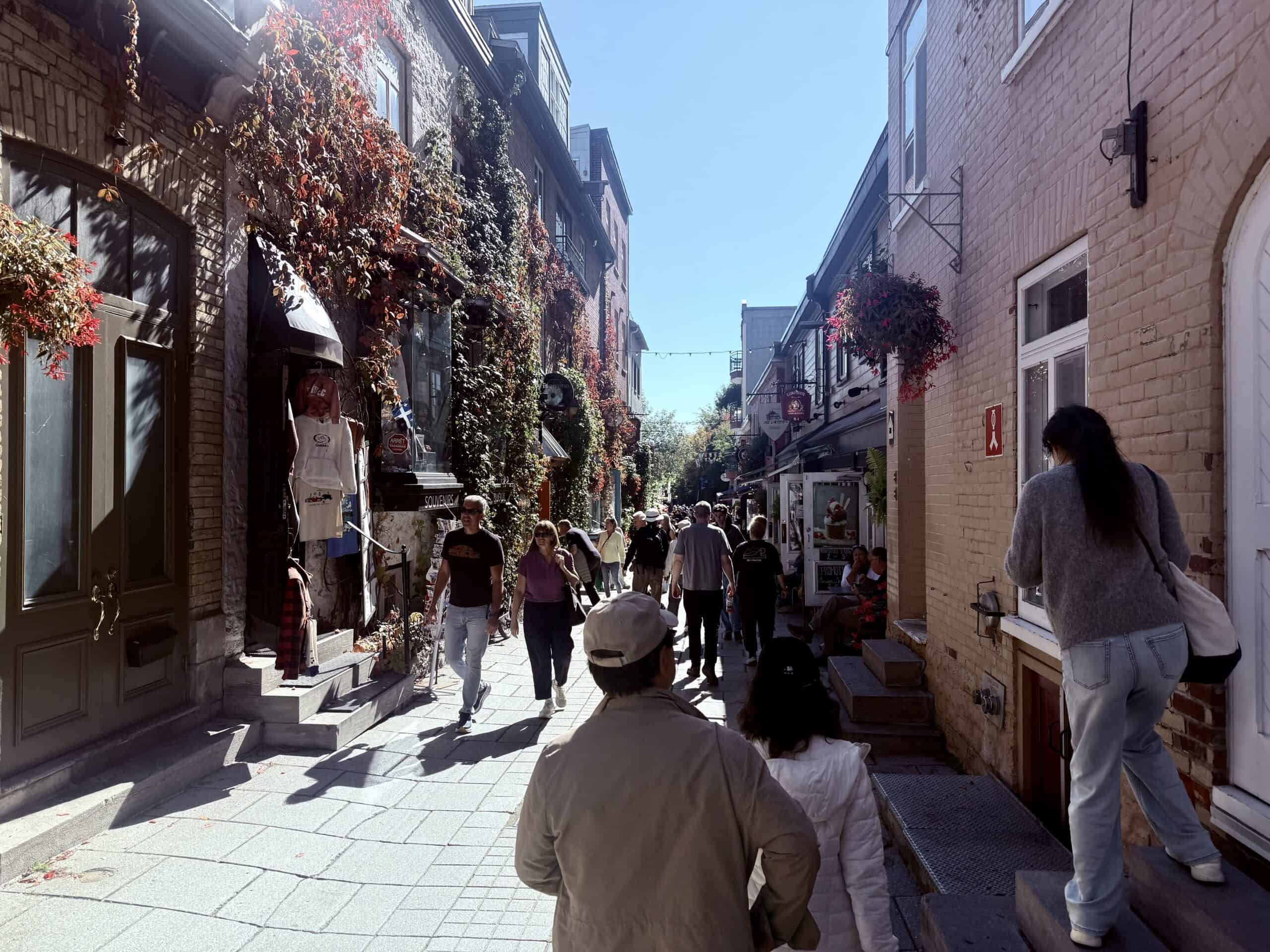
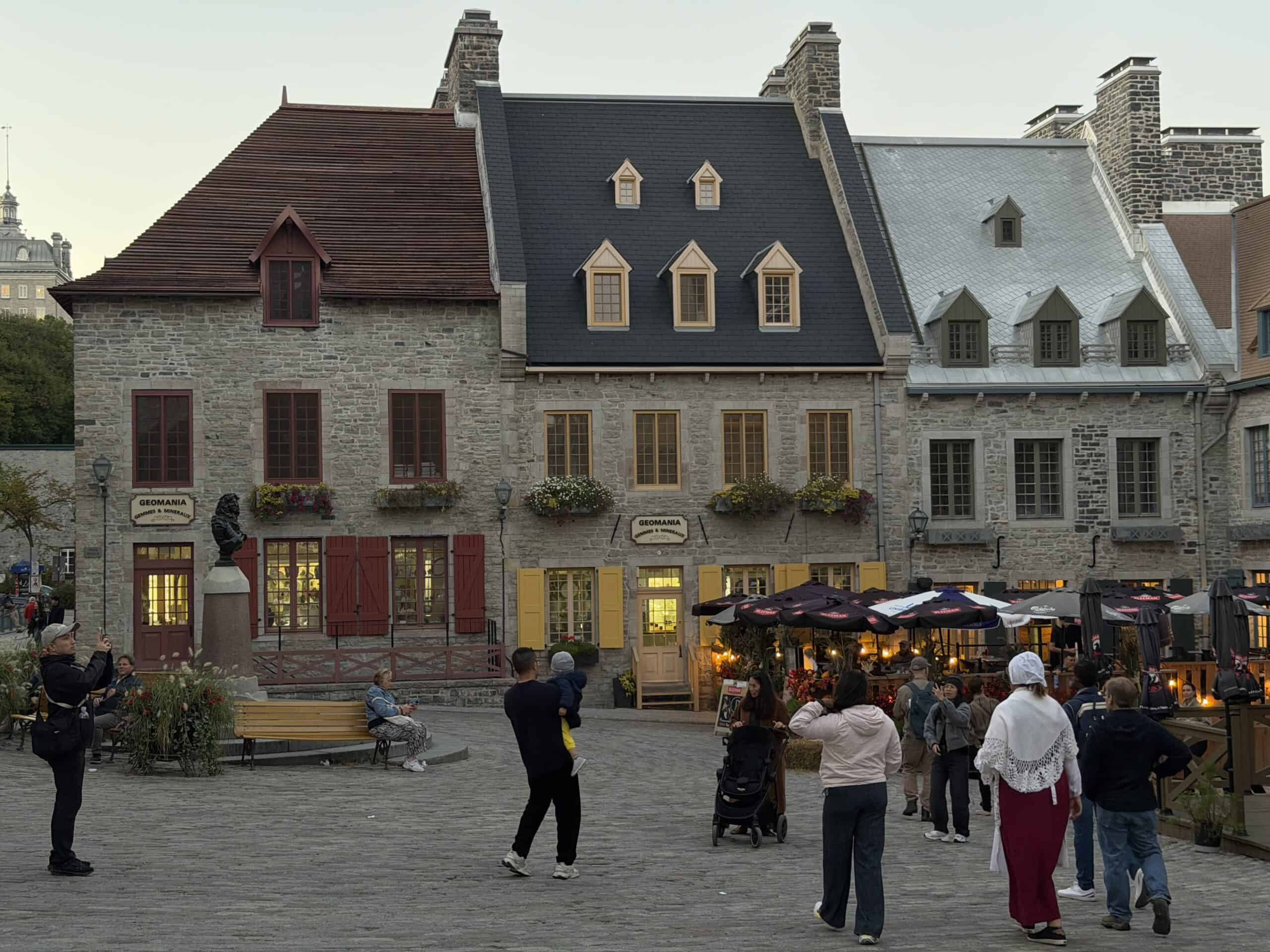
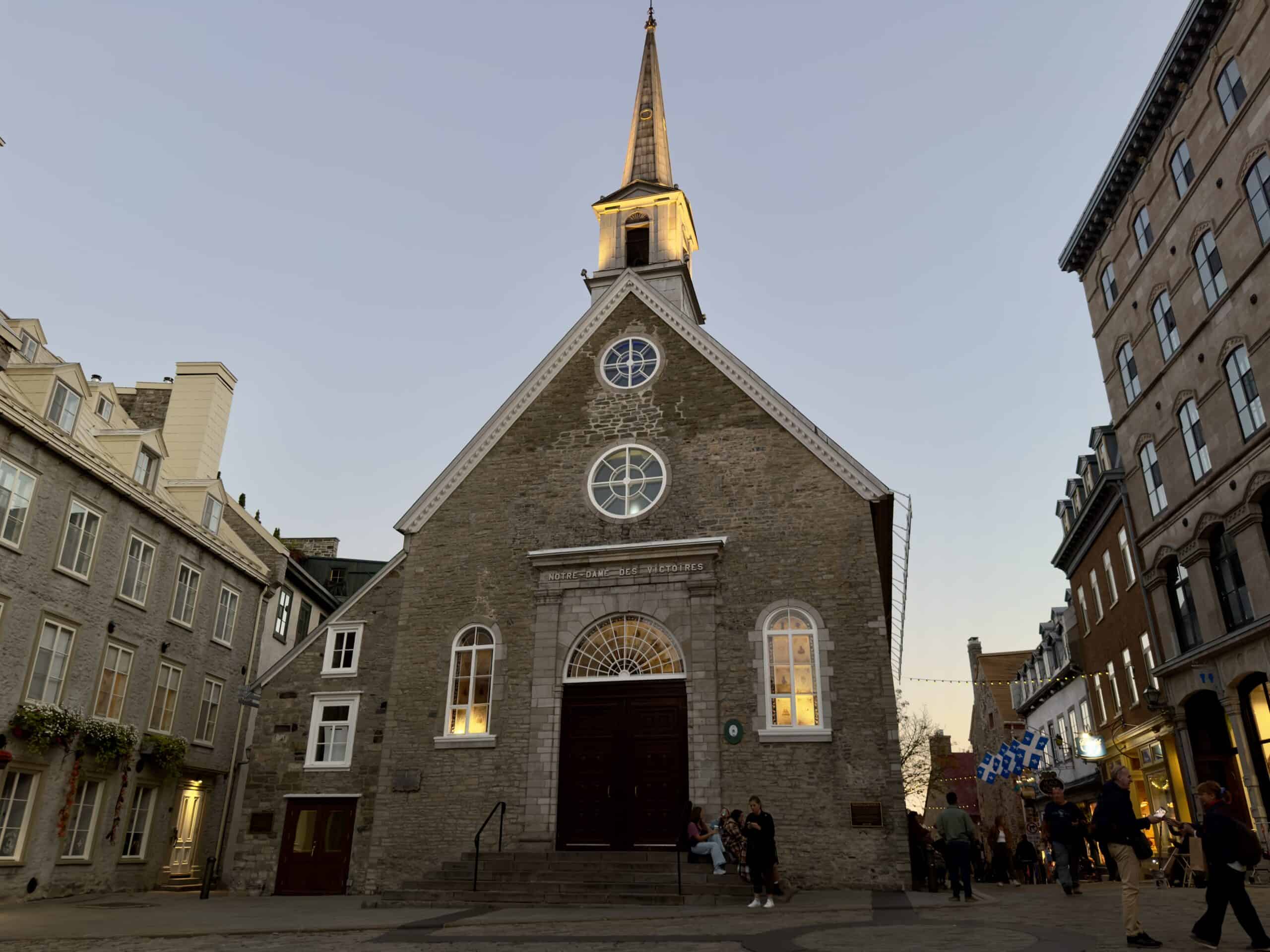
Take time to walk around the interesting town square of Place Royale, where Samuel de Champlain founded Quebec City in 1608 and where Notre-Dame-des-Victoires, Canada’s oldest stone church, stands.
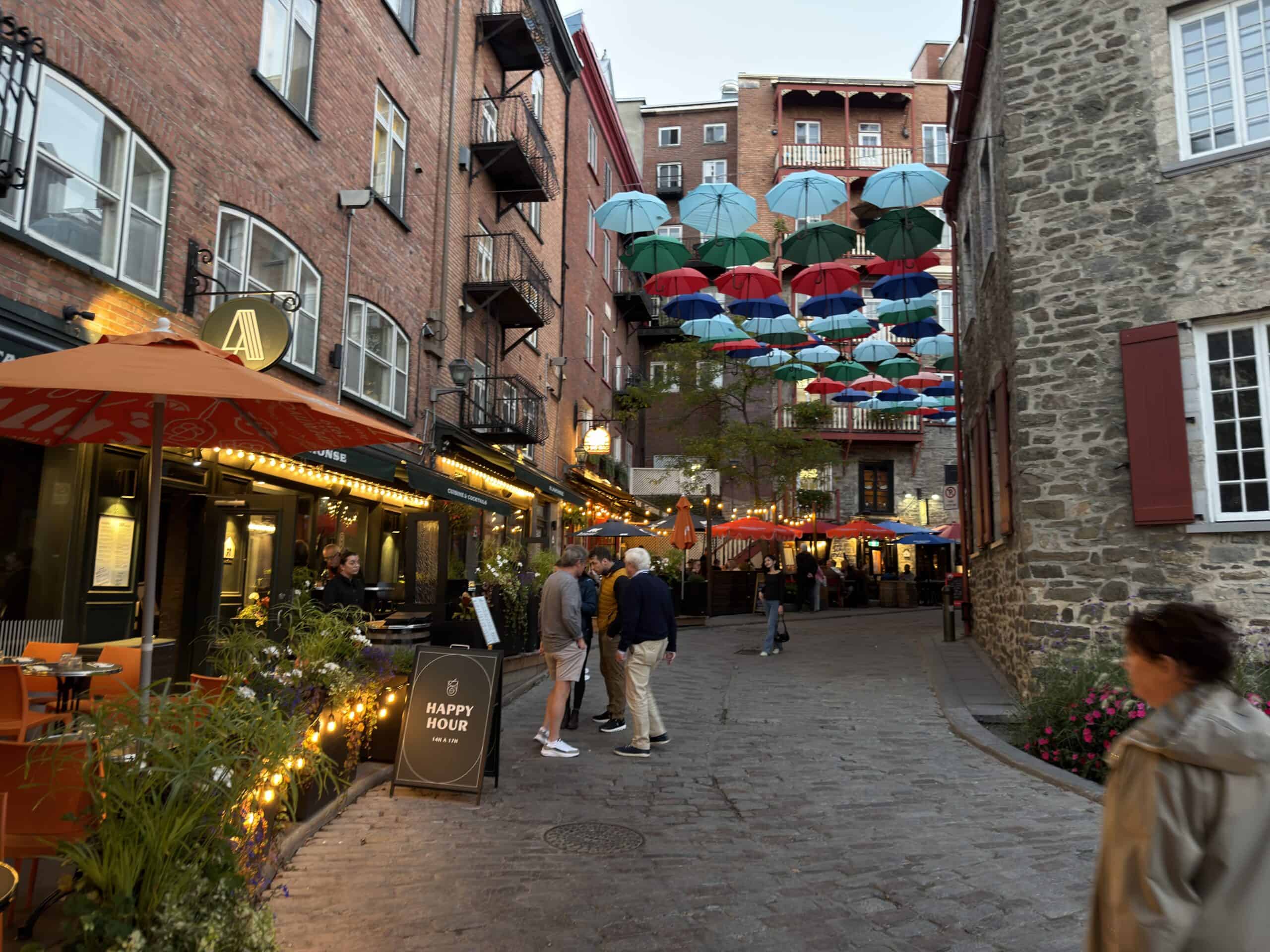
In the summer and fall, don’t miss the photogenic Umbrella Alley (Rue du Cul-de-Sac), a whimsical art installation of colorful umbrellas forming a canopy above a narrow pedestrian street. Seeing it near dusk or dawn is especially scenic.
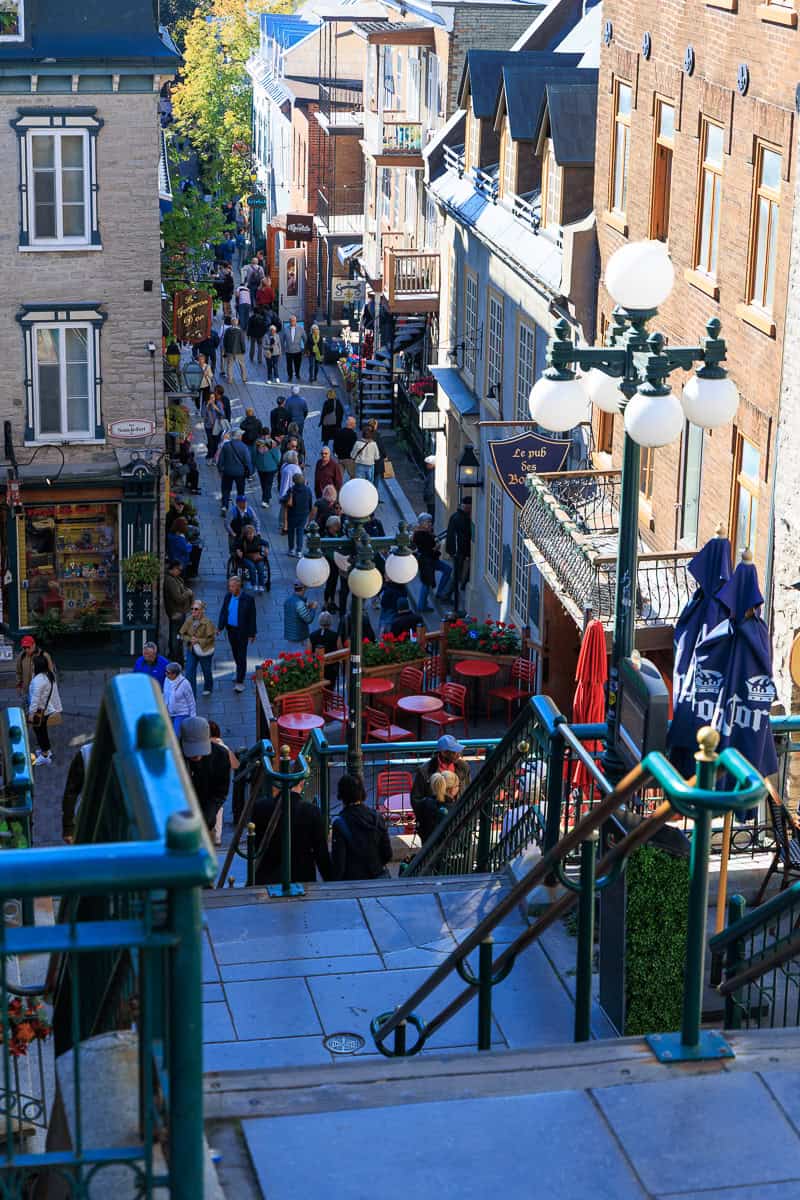
Just past Umbrella Alley is Escalier Casse-Cou (Breakneck Stairs), a steep staircase built around 1635 that connects Lower Old Town to Upper Old Town. From the top of the stairs looking down, there are lovely views of Lower Old Town, especially Rue du Petit-Champlain. The Old Quebec Funicular is located here as well, should anyone in your group wish to take a ride.
Have a final meal in Old Town, and bid Quebec City a fond au revoir.
Just like that, 36 hours in Quebec City have flown by. With a return trip, the city has even more to offer. For example: Musée National des Beaux-Arts du Québec, a fine arts museum; Île d’Orléans, a scenic island across the St. Lawrence River; the Museum of Civilization, including First Nations exhibits; and the nearby Jacques-Cartier National Park, a glacial valley offering hiking & boating.
Will you be returning for more Canadian adventures? Check out our other articles:
Are you looking for other trip ideas?
Discover more from Werthwhile Wandering
Subscribe to get the latest posts sent to your email.


Great article and beautiful pictures. It will be a must see for me.